Smart home · furniture hardware
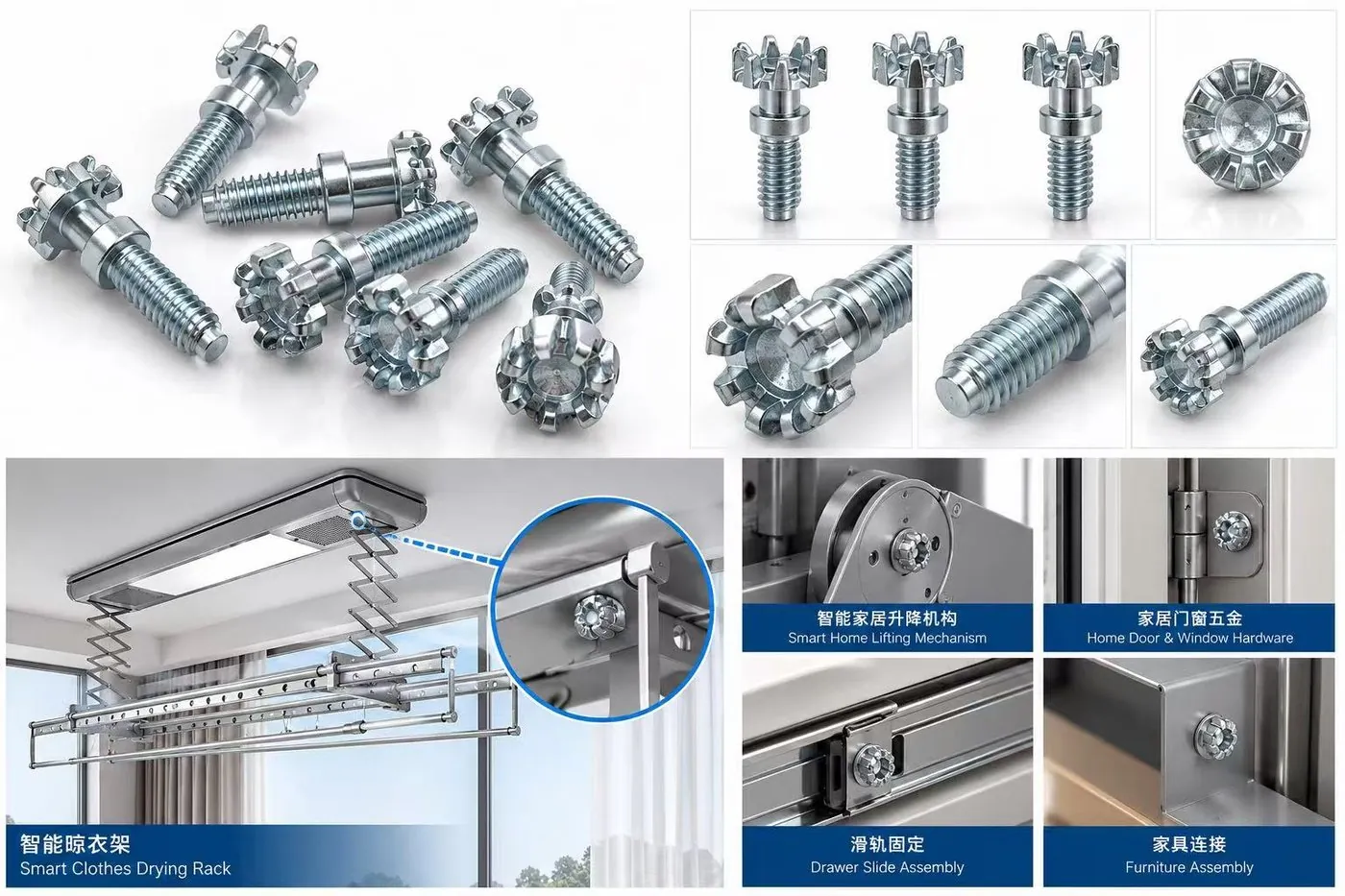
A toothed head that takes drive torque on automated lines, in a geometry no standard driver fits. The head is formed, not milled — which is why it stays affordable.
The part
The flower head exists because a Phillips bit slips and a hex socket needs a deeper recess than the part allows. Formed teeth engage a matching driver over a large area, so torque goes into the joint instead of into the bit.
Specification
These are the ranges we produce most often. If your drawing sits outside them, send it anyway — the answer will be honest, including when the answer is no.
| Material | Carbon steel · stainless steel |
| Thread | M2 – M6 |
| Head | Flower / multi-tooth, formed |
| Length | 6 – 40 mm |
| Finish | Zinc, nickel, passivation |
| Process | Cold heading + thread rolling |
Values shown are typical for this part family, not a catalogue limit. Final specification is agreed against your drawing.
Why it is difficult
A part that looks correct can still fail in the field. These are the failure modes the process is designed around.
| Head burst | Too much torque on a formed head splits the teeth — the drive torque limit is measured, not guessed. |
| Cam-out | A worn driver or a shallow recess turns torque into slip. |
| Thread stripping | In plastic or thin sheet, the mating material fails before the screw does. |
Inspection
Projector check against the driver drawing.
Measured to the point of cam-out.
Measured in the customer's mating material where specified.
Salt spray for exterior applications.
Where it goes
Lifting mechanisms that see constant load cycles.
Exterior fittings where stainless is mandatory.
Assembly where the driver must not slip.
Flat-pack joints with limited recess depth.
Feasibility, process route and an indicative price in 48 hours — including when the answer is that turning is the better route.
Send a drawing