Audio · instrumentation · industrial controls
A knob is a grip surface and a cosmetic part at the same time. Turned from one piece of 6061, knurled and anodised, the difference between a good knob and a bad one is the knurl pitch — not the colour.
The part
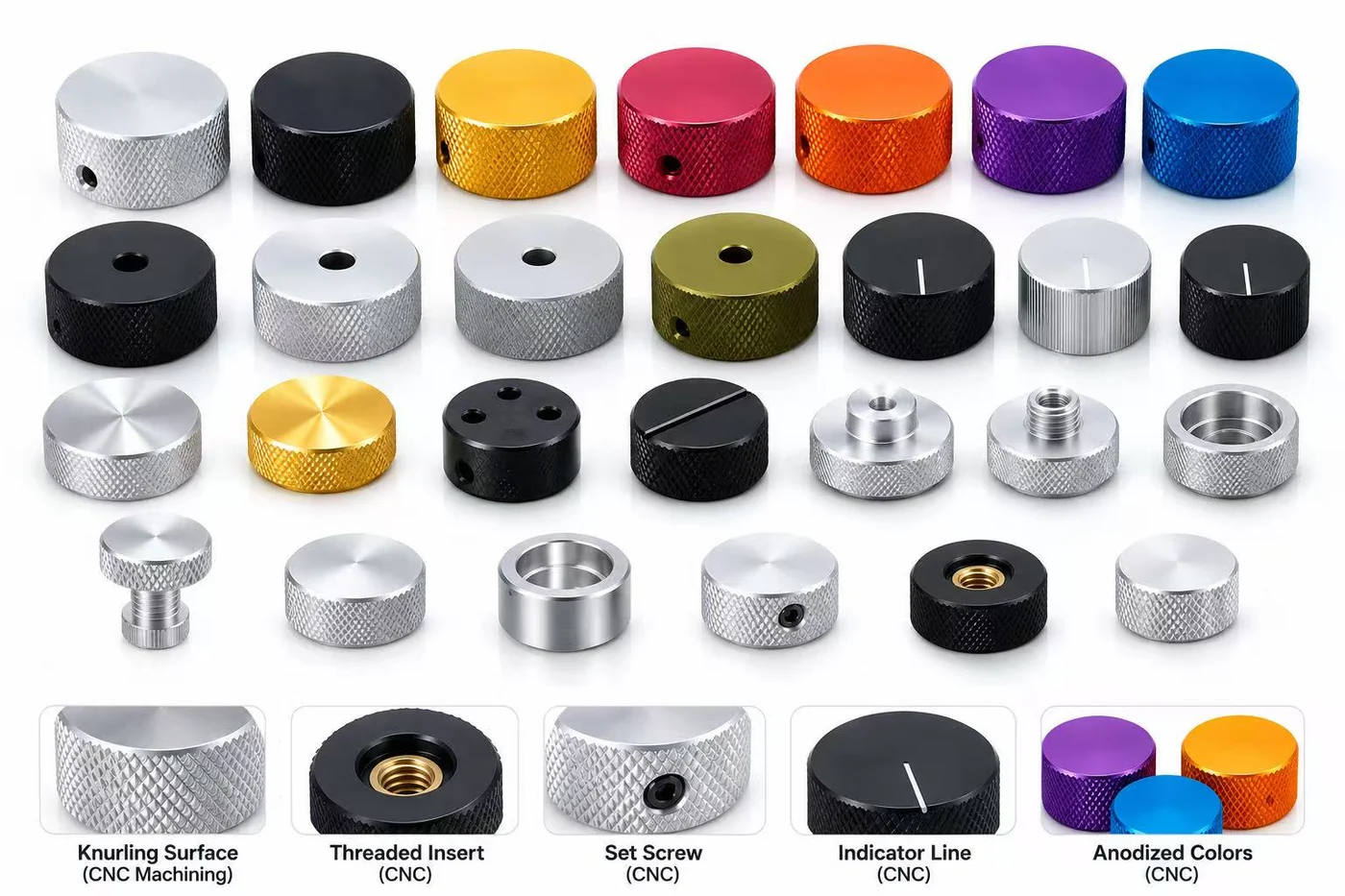
A single-piece aluminium knob, CNC turned from 6061-T6, knurled for grip and anodised for colour and wear. It either clamps onto a shaft through a blind set-screw hole, or takes a screw through a brass insert.
Specification
These are the ranges we produce most often. Send the drawing — including the shaft it has to sit on, which matters more than the knob itself.
| Material | 6061-T6 aluminium, single piece |
| Diameter | 12 – 40 mm |
| Knurl | Diamond or straight, pitch and depth to the drawing |
| Anodising | Type II, colours matched to a sample or Pantone reference |
| Insert | Brass threaded insert M3 – M6, or direct thread in aluminium |
| Tolerance | ±0.05 mm on bore and seat, tighter on request |
| Options | Indicator line, blind set-screw hole, D-shaft bore, skirt |
Values shown are typical for this part family, not a catalogue limit. Final specification is agreed against your drawing.
The range
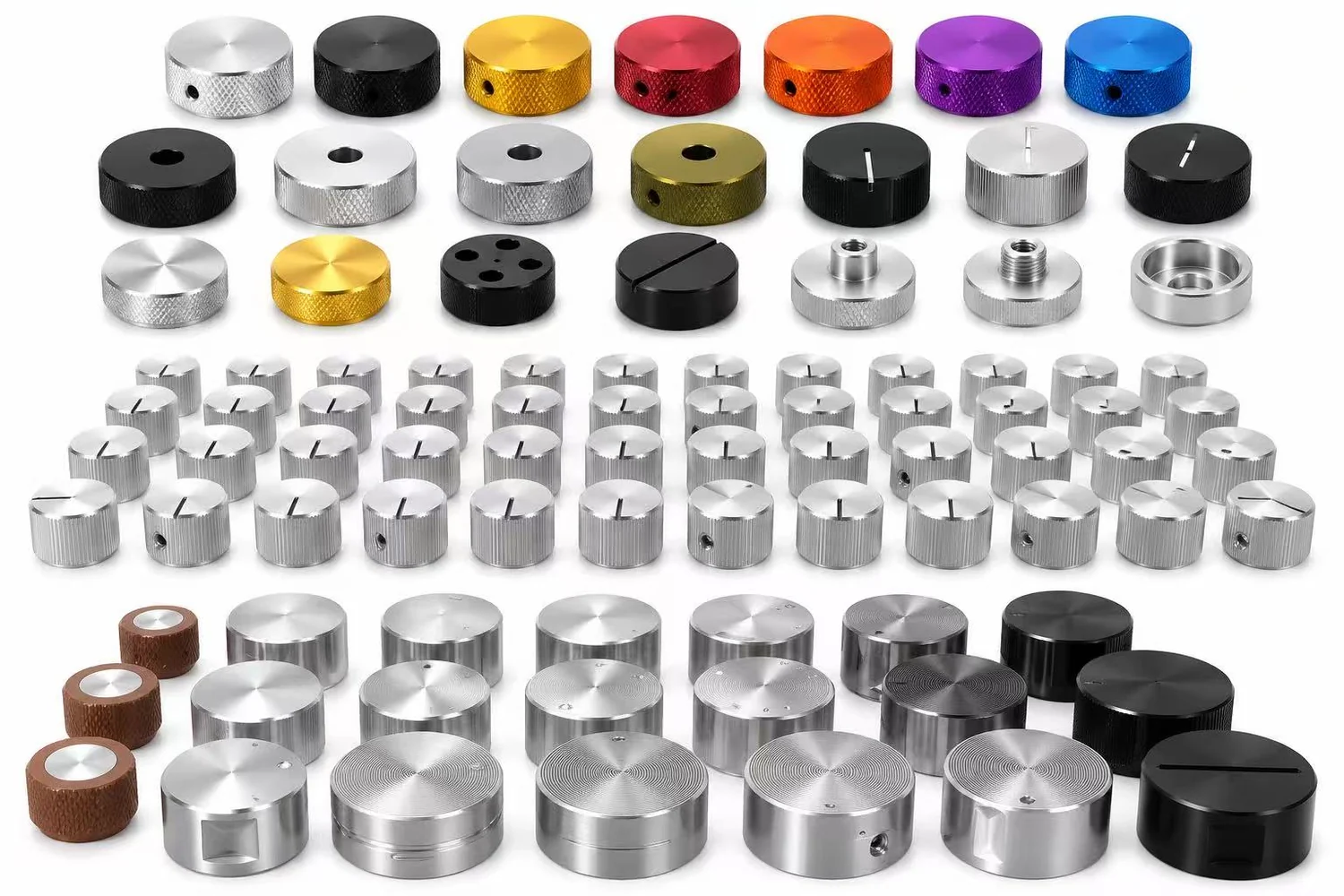
The same process covers a wide spread of sizes and materials: 6 mm to 40 mm diameter, diamond or straight knurling, plain or with an indicator line, anodised in colour or left machined. Wood and plastic-faced versions are assembled onto the same turned aluminium body.
Why it is difficult
| Knurl too sharp | A fine pitch cut deep will hold beautifully and cut the operator's fingers after a shift. Depth and radius matter more than the pattern. |
| Knurl too shallow | It looks right and slips under a wet hand. The knurl has to survive handling, not just inspection. |
| Anodising on threads | A 15 µm coating on an M4 thread changes the fit. Threads are masked before anodising, or the insert is fitted after. |
| Insert pull-out | A brass insert in aluminium holds only if the bore and the knurl on the insert are matched. Under torque it will spin. |
Inspection
Comparator and magnification, per lot — checking depth, not just presence.
2D projector against the shaft the knob will sit on.
Go/no-go gauge, plus a torque test on the insert.
Compared to the approved sample under daylight, not under factory lighting.
Where it goes
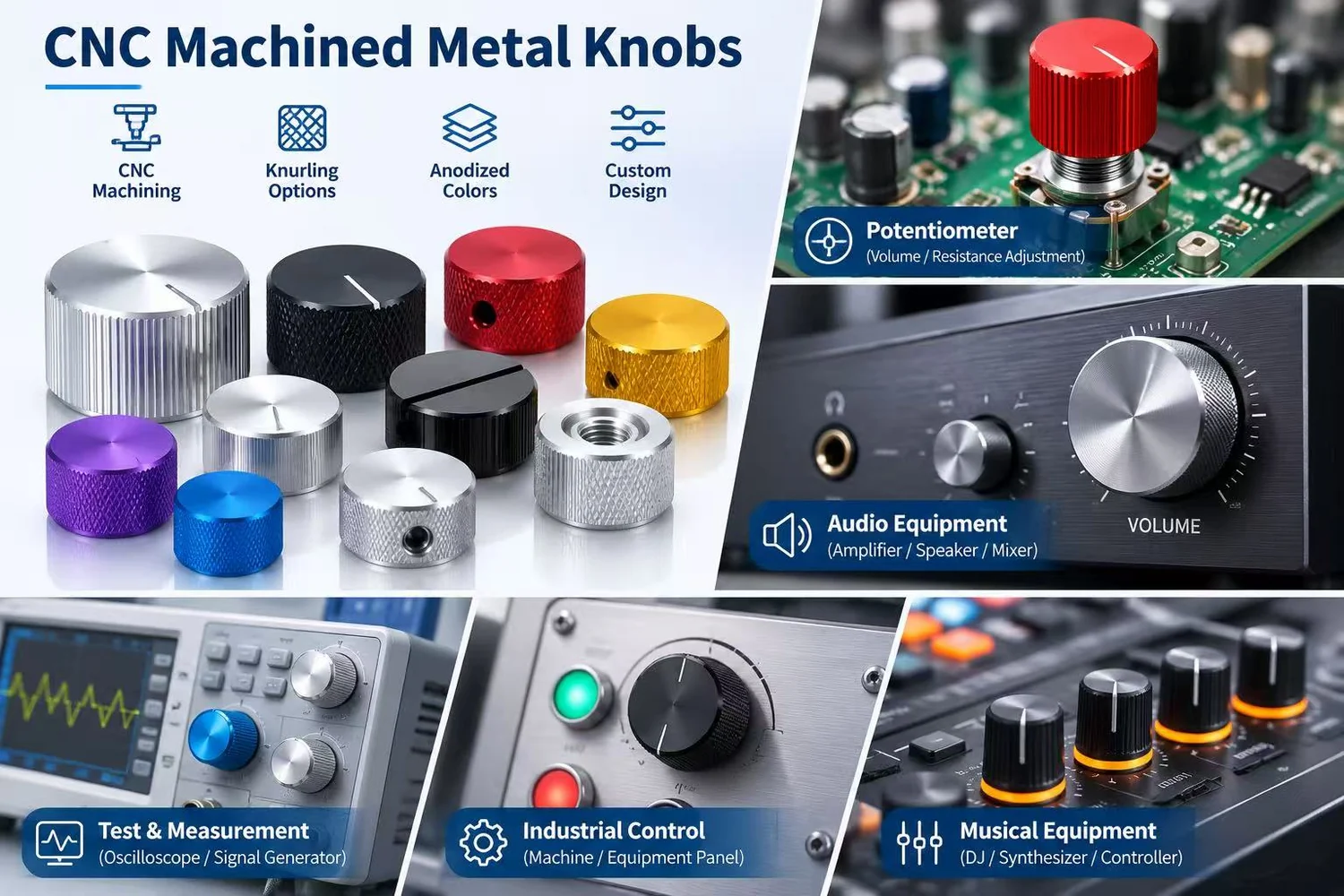
The same turned and knurled body ends up on a potentiometer, an amplifier faceplate, a bench instrument, a machine panel or a synth controller. What changes is the shaft fit and the grip requirement — not the manufacturing route.
Feasibility, process route and an indicative price in 48 hours — including when the answer is that turning is the better route.
Send a drawing